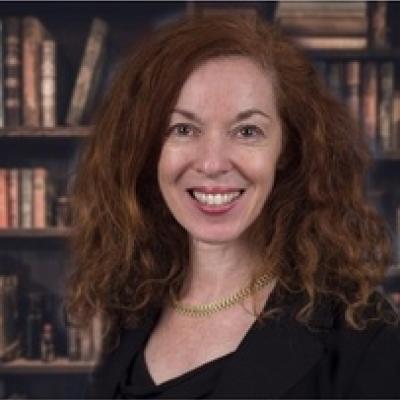
Azeem Haider
Haider’s interest in memory and language models is informed, in part, by his work as a conversation partner for students studying Urdu.
Walking past University Health Services (UHS) last year, Azeem Haider was transported back to an unremarkable vaccine visit months prior, when a UHS nurse mentioned she enjoyed eating lunch at the Durfee Conservatory.
“In my mind, I completely forgot it, but something ticked in my brain in less than a second, and I had the entire recollection there,” said Haider, a computer science master's student at the Manning College of Information and Computer Sciences (CICS). “It’s those things we still haven't completely understood and we haven’t been able to mimic.”
Why did his brain hold onto something that he’d completely forgotten—and what made it suddenly accessible again? This question sits at the center of Haider's academic and personal interests. His work exploring why language models forget learned information is one part of a broader interest in how the human brain works—an interest that’s informed by his experience as a conversation partner for people learning Urdu at the Five College Consortium Center for World Languages.
“I think speaking to people is a great way of understanding how people work, and how people think,” Haider said. “We can use that knowledge to help us build new technologies.”
Cognitive Interest
Haider first became interested in studying how humans think as an undergraduate computer science student at Habib University in his home city of Karachi, Pakistan. After working on a cognitive science project that involved interviewing over 100 students, he started to think about how studying the human brain could advance artificial intelligence.
“Neural networks are inspired by how brains work, and we’re still trying to understand ... both things together,” he said.
After a year working as a machine learning engineer for a Pakistani telecommunications company, he decided to attend Manning CICS to pursue research.
“CICS was the perfect opportunity for me,” he said.
As a master’s student, Haider works closely with Provost Professor Hava Siegelmann to explore why language models forget past information when they’re further trained on new knowledge, and what can be done to prevent it.
Language models don’t “remember” in the same way humans do, Haider said. He’s also interested more broadly in how AI systems handle memory.
“Memory, in relation to the agent architecture, refers to the storage and retrieval of information at runtime,” he said. “Precisely, what do you need to store from the previous interaction that can be recalled in a future trace, making the overall process more efficient and accurate.”
Still, Haider says there’s much to be gleaned from observing how others think.
“How do humans process memory? How do humans continually learn things?” Haider asked. “These problems we see are there in computer science as well—we’re trying to figure out how memory and language models work as we increase the scale.”
Haider’s interest in those questions extends beyond formal research. He is also attentive to the ways people learn through conversation, experience, and interaction with others.
That perspective took on a more personal dimension after he moved from Karachi to Amherst and found himself spending most of his days speaking English rather than Urdu.
Learning from Others
“Urdu was both my language of communication and language of expression,” he said. “When I came to UMass, out of the blue, that language of communication turned to English.”
Busy with coursework and his new life in Amherst, Haider decided he needed to find a consistent reprieve. He turned his eyes to the Five College Consortium language center once he learned they were seeking people to be conversation partners for students learning Urdu.
“Getting involved with the language center had two motivations behind it,” Haider said. “The first one was to get to know more people, talk to people, and in doing so, help people. And the other one was very selfishly and very important for my own self, which was to speak in Urdu, because I like doing that.”
For two and a half hours every week, Haider met with three people learning his native language. He discovered the students’ “beautiful motivations” for studying Urdu, such as desires to connect with Pakistani culture or with their families.
In advance of each session, Haider prepared certain scenarios for the students, walking them through everyday situations like how to ask a shopkeeper for an item. But Haider didn’t just provide real-life examples, he also introduced the students to Urdu poetry and writing.
“Syntax, semantics you learn—and that’s obviously very important,” he said. “But you have to go through with the literature because that’s where any language really shines. ... That’s the culture of the language—something that really holds the essence of what the language is really about.”
Watching students stumble through sentences before slowly gaining confidence in their abilities throughout the semester influenced how he thinks about his own academic work.
“In the first class, no one can speak a perfect, coherent sentence,” he said. “[But] when you see someone’s progression ... it reminds you of what it’s like to learn computer science.”
Looking Ahead
Haider said his work as a conversation partner has influenced the direction he wants to take as a computer scientist.
“My motivation is always: How can we learn more about us? And when I say us, I mean the brain,” he said.
This summer, he took the insights he’s gained throughout his life—in Pakistan, at Manning CICS, and at the language center—and applied it to a data science internship at Cotiviti, where he worked on the research and development of healthcare payment integrity solutions.
“[Humans] remember a lot of things throughout our entire life, but we don’t require memory upon memory, and we don’t just scale linearly,” he said. “We learn ... through experiences, talking to individuals, and just broadening your scope.”