Manning CICS Researchers Help Reveal Critical Weakness in China's Great Firewall
SPIN Research Group uncovered vulnerabilities in China’s system for censoring QUIC internet traffic and helped develop strategies for circumventing it.
Content
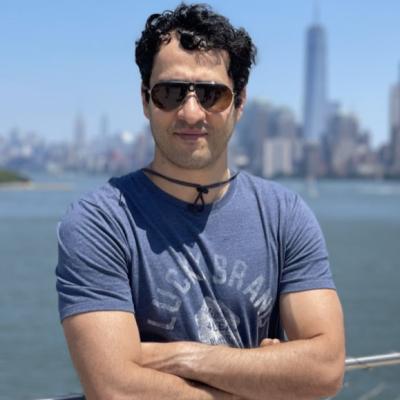
Research from the Secure, Private Internet (SPIN) Research Group at the Manning College of Information and Computer Sciences (CICS), co-led by doctoral candidate Ali Zohaib, has earned new accolades by identifying a significant weakness in the Great Firewall (GFW) of China, the country’s nationwide internet censorship system. Their findings reveal that the GFW can become dramatically less effective under moderate internet traffic loads, providing new insight into how large-scale censorship systems operate and how online access can be preserved in heavily restricted environments.
The research, "Exposing and Circumventing SNI-based QUIC Censorship," earned a 2026 Best Practical Paper Award from the Free and Open Communications on the Internet (FOCI) community and a Best Paper Honorable Mention at USENIX Security 2025, where the work was presented.
The Great Firewall, used by the Chinese government to restrict access to information from outside the country, targets and intercepts QUIC connections, a widely adopted internet protocol that underpins many modern web services.
The researchers discovered that the GFW’s censorship mechanism has a significant weakness: the computational burden of inspecting and decrypting the initial packets of QUIC connections can overwhelm the system under relatively modest network loads. Their analysis showed that sending a moderate number of QUIC messages, even to uncensored websites, can significantly reduce the GFW’s ability to block targeted connections.
The study also revealed an unexpected consequence of the censorship technology. Under certain conditions, the same censorship mechanism could be exploited to disrupt internet traffic between hosts inside China and the rest of the world. Such an attack could interfere with access to servers outside the country, potentially causing widespread disruptions in internet connectivity within China’s borders.
The vulnerability was so serious that the research team disclosed its findings to China's Computer Emergency Response Team (CNCERT/CC) before publication. The team received no reply, but the vulnerability was partially fixed a few weeks after the disclosure, Zohaib said.
The paper explores the ethical complexities of identifying and publicizing weaknesses in censorship technologies. “Normally disclosure is simple: find a flaw, tell the operator, users are safer,” he said. “That breaks down when the system itself is the harm: helping the GFW's operators patch a bug could make them better censors.”
Because the flaw could have caused outages for people doing nothing censorship-related, the team decided to disclose it to CNCERT/CC, “not to help them or the Chinese government, but to protect those users,” Zohaib said. “Importantly, we didn't hand them a patch,” he added. “We recommended removing the QUIC censorship device entirely, since it causes both the vulnerability and the censorship. The fix we asked for was to stop censoring.”
By contrast, the degradation attack—overwhelming the GFW so it can’t keep up with decryption—affects only the censorship infrastructure, not users. “Publishing it via the paper means anti-censorship developers and users can take advantage of the flaw to degrade the GFW and get around the blocking,” Zohaib explained.
The SPIN Research Group, led by Professor Amir Houmansadr, Zohaib's faculty advisor, has received broad recognition for its work on internet freedom, censorship circumvention, and privacy-enhancing technologies.
The recognition for this paper "is especially meaningful because the FOCI Best Practical Paper Award honors research with significant real-world impact in advancing internet freedom,” Houmansadr said.
Other collaborators on the paper are Qiang Zao, co-lead author, from the GFW Report; Jackson Sippe, Abdulrahman Alaraj, and Eric Wustrow from the University of Colorado Boulder; and Zakir Durumeric from Stanford University.
Zohaib said his interest in studying censorship systems extends beyond China. The GFW, he explained, "is not the only nation-state censor, but it is the most aggressive one globally. Analyzing it helps us understand and circumvent what might soon also happen elsewhere."
The research has already led to practical improvements in censorship-circumvention tools. The team collaborated with several open-source communities to integrate new circumvention strategies into quic-go library and widely used QUIC-based circumvention platforms.
Despite the technical focus of the research, Zohaib said the work is ultimately motivated by a broader goal: expanding access to information.
"I'd like my research to make internet access more resilient for people living under censorship," he said.