Research in the AI Era Seminar: Aaron Roth, Calibration in the Age of AI: From Prediction to Decision Making to AI Assisted Research
Content
Speaker
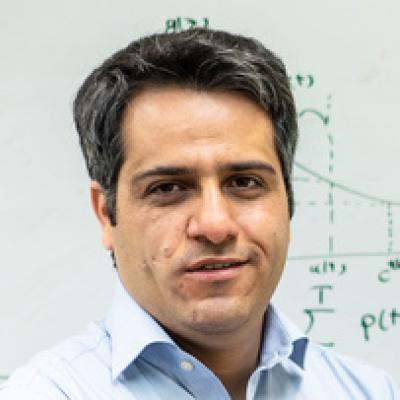
Aaron Roth (UPenn)
Abstract
Calibration serves as a trustworthy interface between prediction and decision making, and has (in my opinion) been getting only more important and interesting as a research topic as AI agents become commonplace. But AI tools are also going to revolutionize how mathematical research is conducted. In this talk we'll walk through two lower bounds we have proven, establishing the optimal sample complexity for multicalibration in both the sequential and batch settings. Both of these papers were written with AI assistance, and at the end of the talk we'll describe the process and the tools we used. We will end with Q&A and unstructured musings about what AI is already very good at and where its weak spots lie.
Speaker Bio
Aaron Roth is the Henry Salvatori Professor of Computer and Cognitive Science, in the Computer and Information Sciences department at the University of Pennsylvania, with a secondary appointment in the Wharton statistics department. He is affiliated with the Warren Center for Network and Data Science, and co-director of the Networked and Social Systems Engineering (NETS) program. He is also an Amazon Scholar at Amazon AWS. He is the recipient of the Hans Sigrist Prize, a Presidential Early Career Award for Scientists and Engineers (PECASE), an Alfred P. Sloan Research Fellowship, an NSF CAREER award, and research awards from Yahoo, Amazon, and Google. His research focuses on the algorithmic foundations of data privacy, algorithmic fairness, game theory, learning theory, and machine learning. Together with Cynthia Dwork, he is the author of the book “The Algorithmic Foundations of Differential Privacy.” Together with Michael Kearns, he is the author of “The Ethical Algorithm."