Research in the AI Era Seminar: Evan Coleman, Braintrust: Social Knowledgebases as Scientific Fiduciaries
Content

Speaker
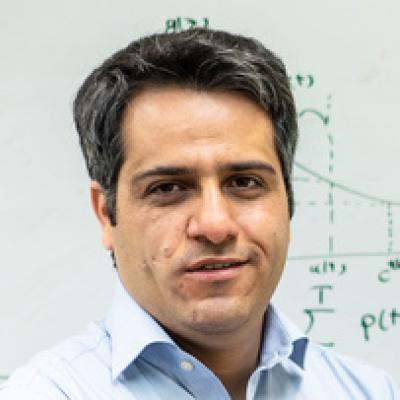
Evan Coleman (Massachusetts Institute of Technology)
Description
This talk will demonstrate how accelerated research enabled by AI can unlock tackling interdisciplinary and long-horizon problems like climate change.
Abstract
Climate change presents a rare existential challenge. Nearly every economic sector contributes to it, since greenhouse gases are common byproducts of thermodynamically and economically favorable processes. At the same time, it is a planetary-scale problem with a single shared benchmark: atmospheric greenhouse gas concentration (CO2e). These conditions make climate change mitigation a natural test case for how experts coordinate to scale critical technologies under a unified, decades-long objective.
Addressing and adapting to a changing climate requires navigating complex technology pathways that span many domains and do not necessarily admit end-to-end automation or simulation-driven discovery. These pathways resemble a “tech tree”: a structured narrative of progress that links partially developed ideas across disciplines to downstream sources of value.
In this talk, I will present Braintrust, an early-stage open-source effort using language models to build navigable tech trees for science. Our goal is to convene researchers, research administrators, and financiers around shared representations of scientific progress. Basic research struggles to support such coordination because expertise is fragmented, first-of-a-kind efforts are risky, and incentives are weakly coupled to downstream economic value. Braintrust models tech trees as interactive structures that evolve with new evidence and human input. This approach is orthogonal to using LLMs for scientific execution: we use semantics to surface cross-domain connections, situate speculative ideas relative to established work, and represent uncertainty at the frontier where coordination and investment decisions are made. I will provide real-world examples within climate technology, and conclude by framing social knowledge bases as fiduciary tools that can support the allocation of resources in high-risk, high-reward scientific programs.
LGRC A112 Multipurpose Space
740 North Pleasant Street
Amherst, MA 01003
United States